Yerington NV – June 25, 2026
By David Nyberg, Columnist
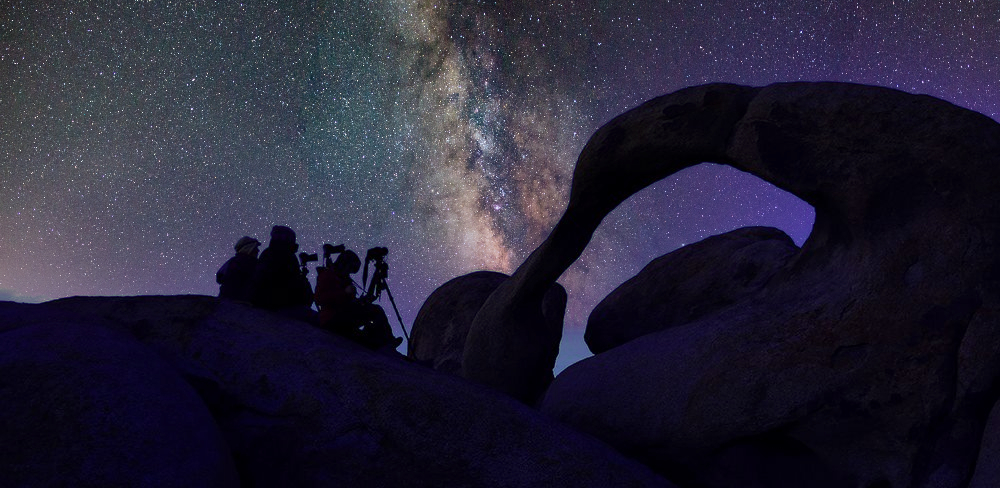
As July settles over Mason Valley, the days are hot, the evenings linger, and the night sky opens into one of its richest seasons. For skywatchers around Yerington, July is one of the best months of the year to see the Milky Way with the naked eye from a truly dark location. On moonless nights away from town lights, it appears not as a bright painted stripe, but as a broad, pale river of starlight, with brighter and darker patches running through it. This is our own galaxy seen edgewise from within, and summer is one of the finest times to look for it.1
A good guide to the Milky Way in July is the Summer Triangle, the large star pattern made by Vega, Deneb, and Altair. On June and July evenings, this triangle rises in the east and becomes one of the easiest landmarks in the warm-weather sky. EarthSky notes that under a dark, moonless sky, the Milky Way can be seen passing through this part of the heavens, with Deneb set right in that river of stars.1
For moon watchers, July offers a favorable rhythm. In the Yerington area, the Third Quarter Moon falls on July 7 at 12:29 p.m., the New Moon on July 14 at 2:43 a.m., the First Quarter Moon on July 21 at 4:05 a.m., and the Full Moon on July 29 at 7:35 a.m. The darkest nights will come in the middle of the month, especially in the days around the New Moon, when the Milky Way and fainter stars are easiest to see.2
July also begins to bring one of late summer’s familiar meteor showers. The Delta Aquariids are active from July 18 through August 21 and are predicted to peak around July 30, 2026. This shower does not usually produce a dramatic single-night burst, but instead rambles along steadily in late July and early August. Under a dark sky, observers may see 15 to 20 meteors per hour at best, though the shower tends to favor southern latitudes and the meteors are often fainter than the Perseids.3
This year, however, the timing of the Moon makes the Delta Aquariids less favorable at peak. EarthSky notes that the Full Moon falls on July 29, 2026, so moonlight will interfere strongly with the shower near its maximum. The better strategy will be to watch during the moon-free mornings after midnight in the week before the peak, when the sky is darker and the meteors stand a better chance of being seen.3
For local observers, the best advice is simple. Pick a warm, dry night near the middle of July. Drive out beyond the strongest light glare. Bring a chair, give your eyes at least fifteen or twenty minutes to adjust, and look first for the Summer Triangle rising in the east. Then watch for the Milky Way as a faint, cloudy band crossing the sky. It is subtler than photographs suggest, but from Nevada’s darker country roads and open desert edges, it can still be a beautiful naked-eye sight.1
July skies over Yerington do not merely glitter. They deepen. They offer the broad path of the Milky Way, the rising Summer Triangle, the dark blessing of New Moon nights, and the first hints of late-summer meteor season. For those willing to step outside and look up, July remains one of the loveliest months of the year.1
Footnotes
- EarthSky, “Summer Triangle: Star pattern of the season,” explaining that on June and July evenings the Summer Triangle rises in the east and that under a dark, moonless sky the Milky Way can be seen passing through it:
https://earthsky.org/astronomy-essentials/find-the-summer-triangle-ascending-in-the-east - Time and Date, “Moon Phases 2026 – Lunar Calendar for Reno, Nevada, USA,” listing the July 2026 moon phases for the Reno area: Third Quarter on July 7 at 12:29 p.m., New Moon on July 14 at 2:43 a.m., First Quarter on July 21 at 4:05 a.m., and Full Moon on July 29 at 7:35 a.m.:
https://www.timeanddate.com/moon/phases/usa/reno - EarthSky, “Delta Aquariid meteor shower: All you need to know in 2026,” stating that the Delta Aquariids run from July 18 to August 21, peak around July 30, 2026, may produce 15 to 20 meteors per hour under ideal dark skies, and are best watched after midnight, especially before the bright moon near peak:
https://earthsky.org/astronomy-essentials/everything-you-need-to-know-delta-aquarid-meteor-shower/



More Stories
Yerington Community Update on Friday, September 25, 2026 from City Manager Jerry Bryant
Lyon Planning Commission Meeting Minutes/Video from August 11, 2026: Approved at September 8, 2026 Meeting
It’s Almost Fall, But a Farmer’s Work is Never Done – UNR