
Mason Valley – April 2026
By D.A. Nyberg
As April arrives, Yerington’s nights grow milder and longer, inviting skywatchers to step outside, breathe the cool spring air, and look upward. This month may not have the dramatic displays of a total eclipse, but it offers its own quiet celestial wonders that reward patience and curiosity.
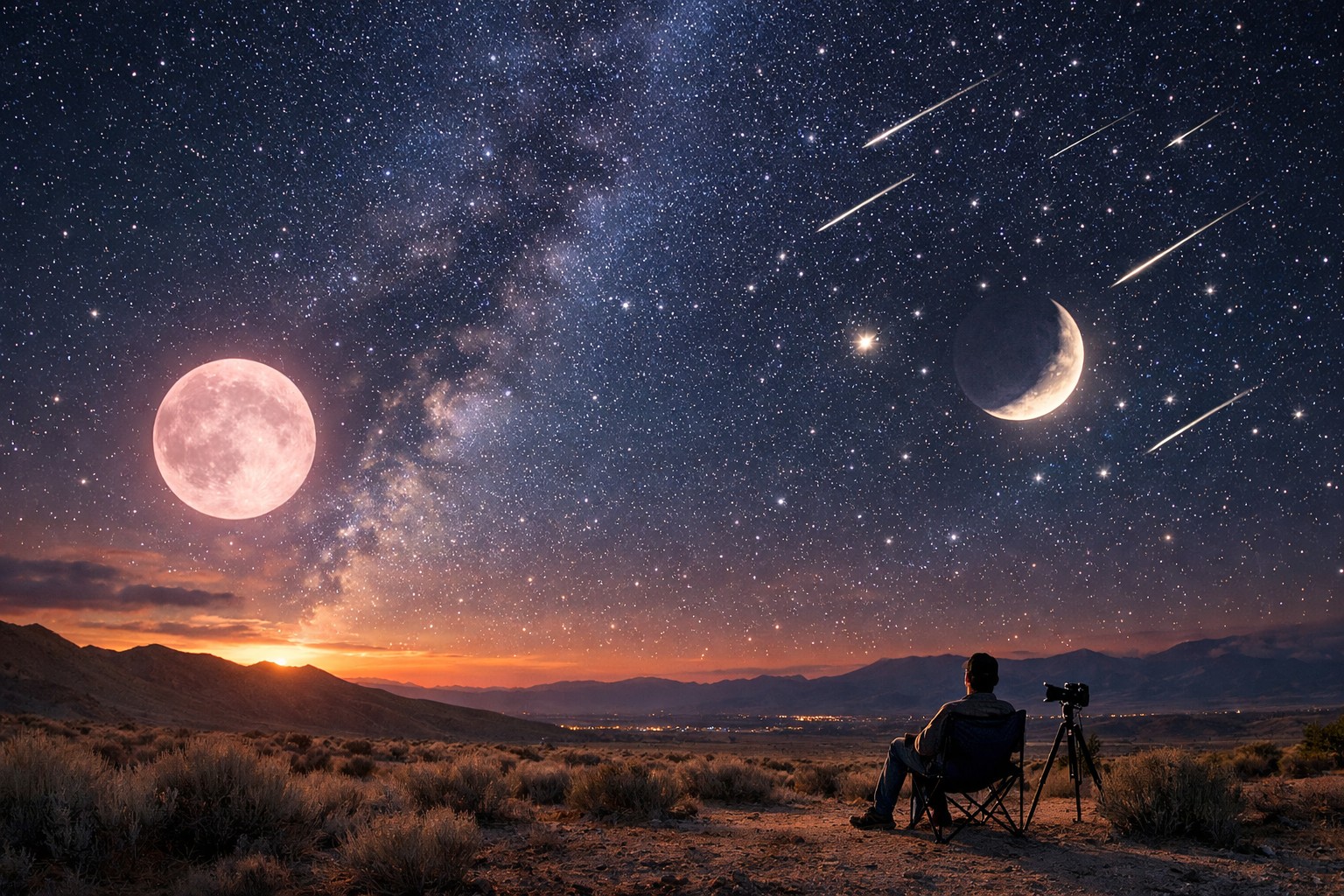
At the very start of the month, our familiar Moon reaches its Full phase on April 1, often called the “Pink Moon.” This name comes not from color in the sky, but from early spring wildflowers blooming across the Northern Hemisphere. Even if the Moon’s glow can wash out fainter stars, it’s a beautiful sight rising in the east after sunset and lighting the desert hills with soft lunar light.
One of April’s highlights is the Lyrid meteor shower, active from about April 15 to April 29 and peaking on April 22. The Lyrids are an ancient and respected meteor shower, born from debris shed by Comet Thatcher as it orbits the Sun. Less prolific than December’s Geminids, the Lyrids typically produce around a dozen meteors per hour under clear, dark skies, and sometimes more if conditions align. Skywatchers east of Yerington may find the early-morning hours before dawn especially rewarding, because that’s when the shower’s radiant climbs highest in the sky.
April also brings opportunities to see Earthshine on the Moon during its waxing and waning crescent phases around mid-month. Earthshine is the faint glow that lights the dark portion of the lunar surface—not from the Sun directly, but from sunlight reflected off Earth itself. With a clear horizon and minimal moonlight, this ethereal sheen becomes visible to the naked eye on certain nights.
In the background throughout April, the planet Jupiter remains visible after sunset. Mercury has become a morning object. Venus went through inferior conjunction on March 23rd and is not visible after sunset in early to mid-April. Watching how the bright dot of Jupiter shifts its positions from night to night is a simple way to feel connected to the rhythms of our solar system as spring approaches.
For the best views, head to a dark spot away from town lights after dinner, bring a chair or blanket, and let your eyes adjust to the darkness. Whether you’re spotting a few Lyrid meteors, tracing the Moon’s soft glow, or simply greeting the steady shine of distant planets, April’s sky over Yerington offers gentle celestial delights worth sharing.
Sources: Sea and Sky Astronomy Calendar; EarthSky Meteor Shower Guide; Timeanddate.com Moon Phases; Space.com Lyrid meteor shower details.




More Stories
Kathy Bomba Edgerton of YHS has been named Junior Achievement of Nevada’s 2026 Principal of the Year!
Yerington Community Update on Friday, September 25, 2026 from City Manager Jerry Bryant
Lyon Planning Commission Meeting Minutes/Video from August 11, 2026: Approved at September 8, 2026 Meeting