Dayton NV – January 18, 2026
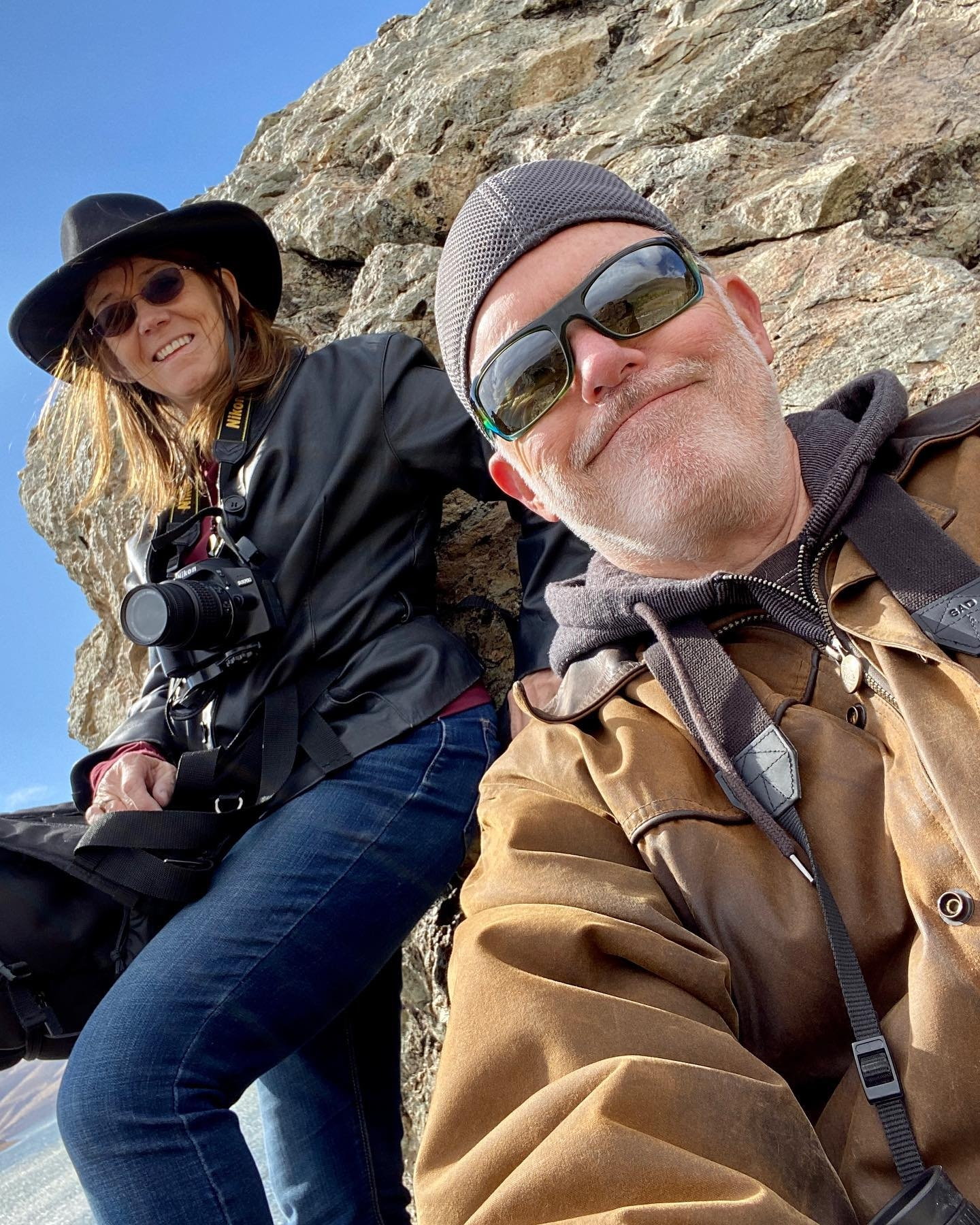
Introducing Terri DuVal Riffle and her husband David Riffle of Dayton, Nevada: Terri states that we are “Retired & loving life! We hike, bike, I read voraciously & love photography!”
Terri & Dave are partners in their photographic adventures, while Terri shares the eye-opening pictures on social media!
Terri’s spectacular photos of the sun, moon, Jupiter and nebulas caught the eye of Pizen Switch Times Editor Leah Wilkinson. Terri graciously agreed to share a few of her photos that she and Dave captured from their backyard with what must be super camera lenses.
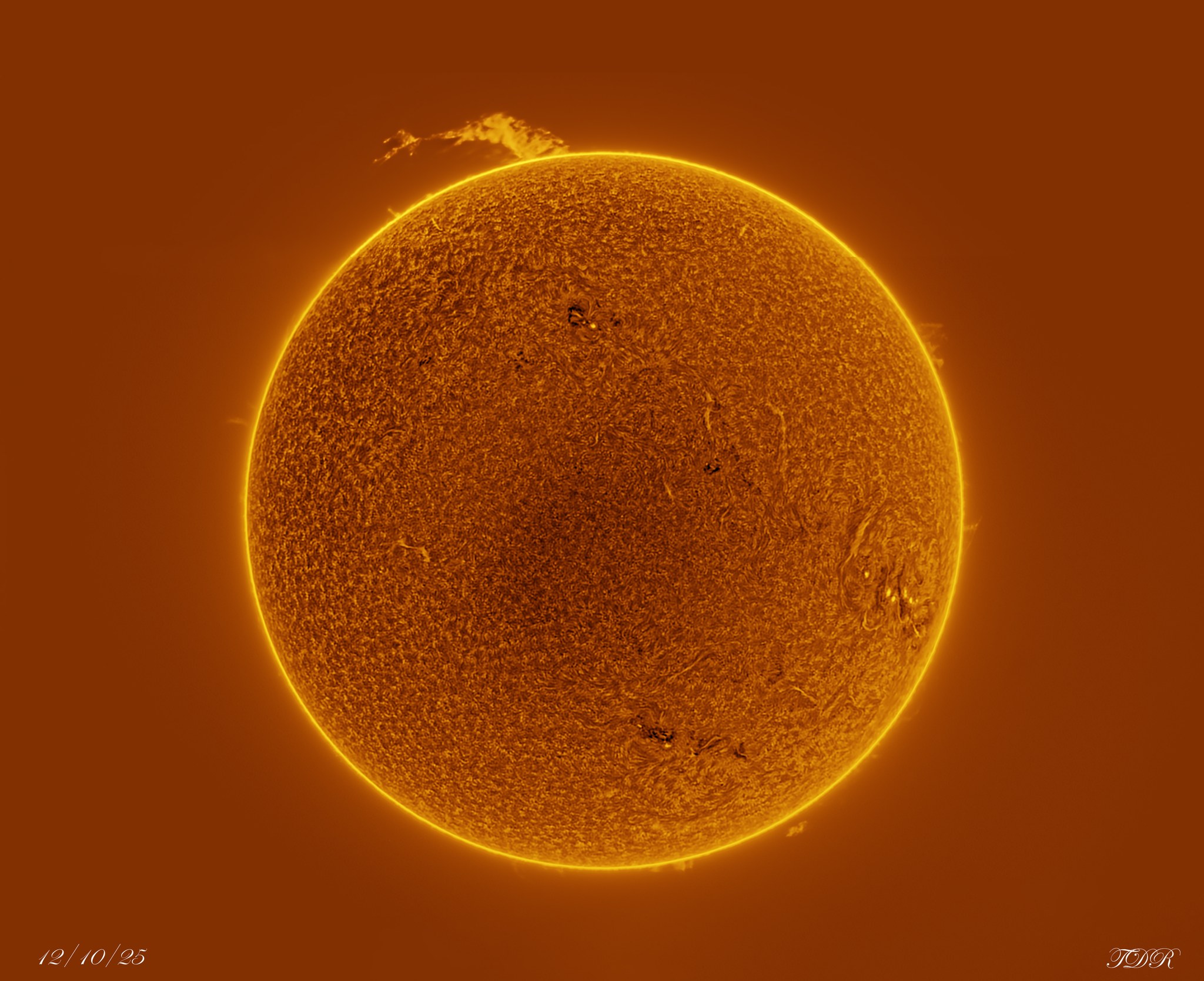
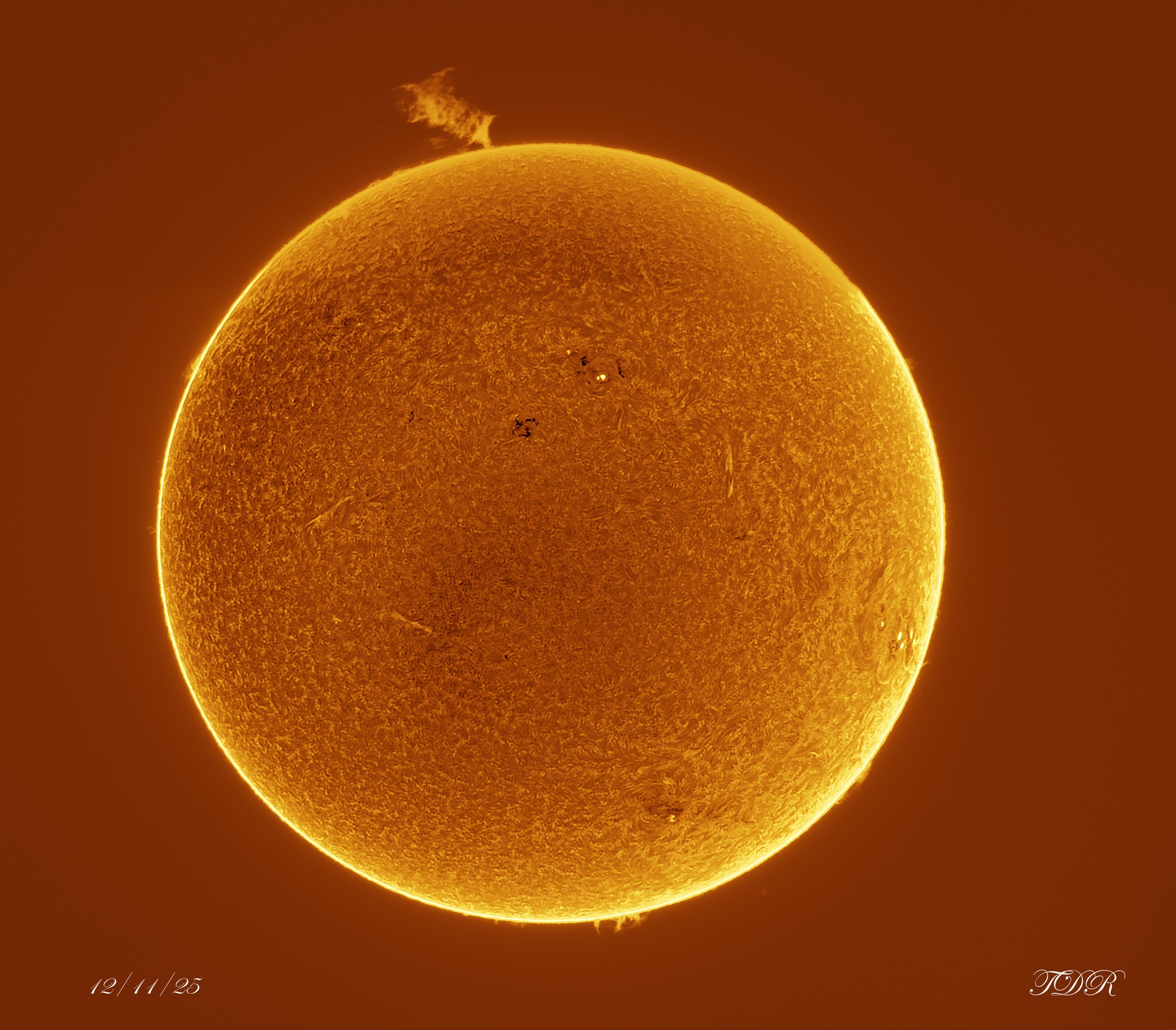
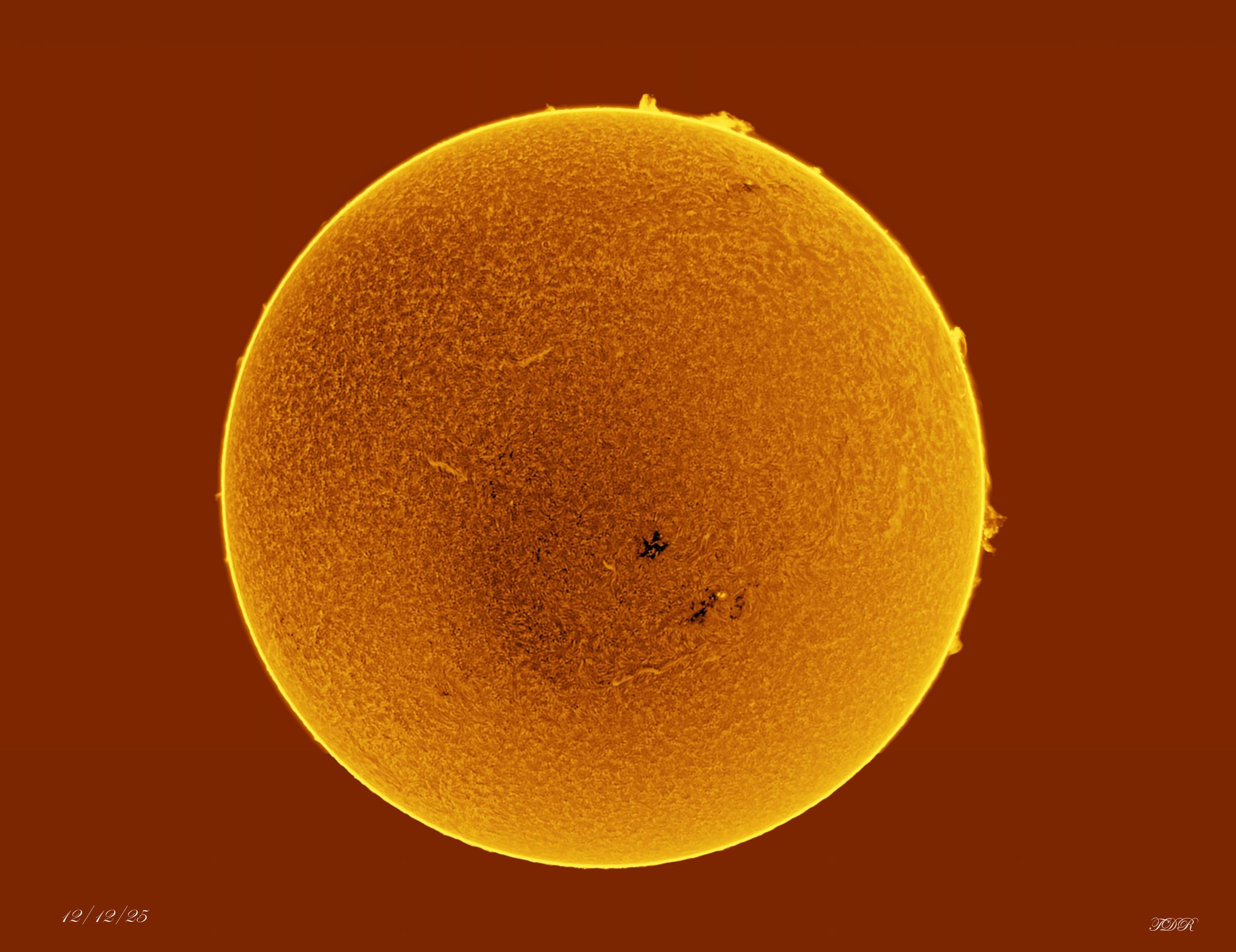
On December 15, 2025 Terri wrote: “Last Wednesday, conditions were favorable for solar photography. To our amazement, there was an absolutely HUGE prominence emitting from the top of the sun! This was about a hundred thousand miles in size! We were lucky enough on the next two days to see how it changed as time passed. It was too slow moving, and we didn’t have time for a time lapse, but we caught these three images, each 24 hours later than the former. It was really cool to see how it changed!”
December 17, 2025 – From Terri:
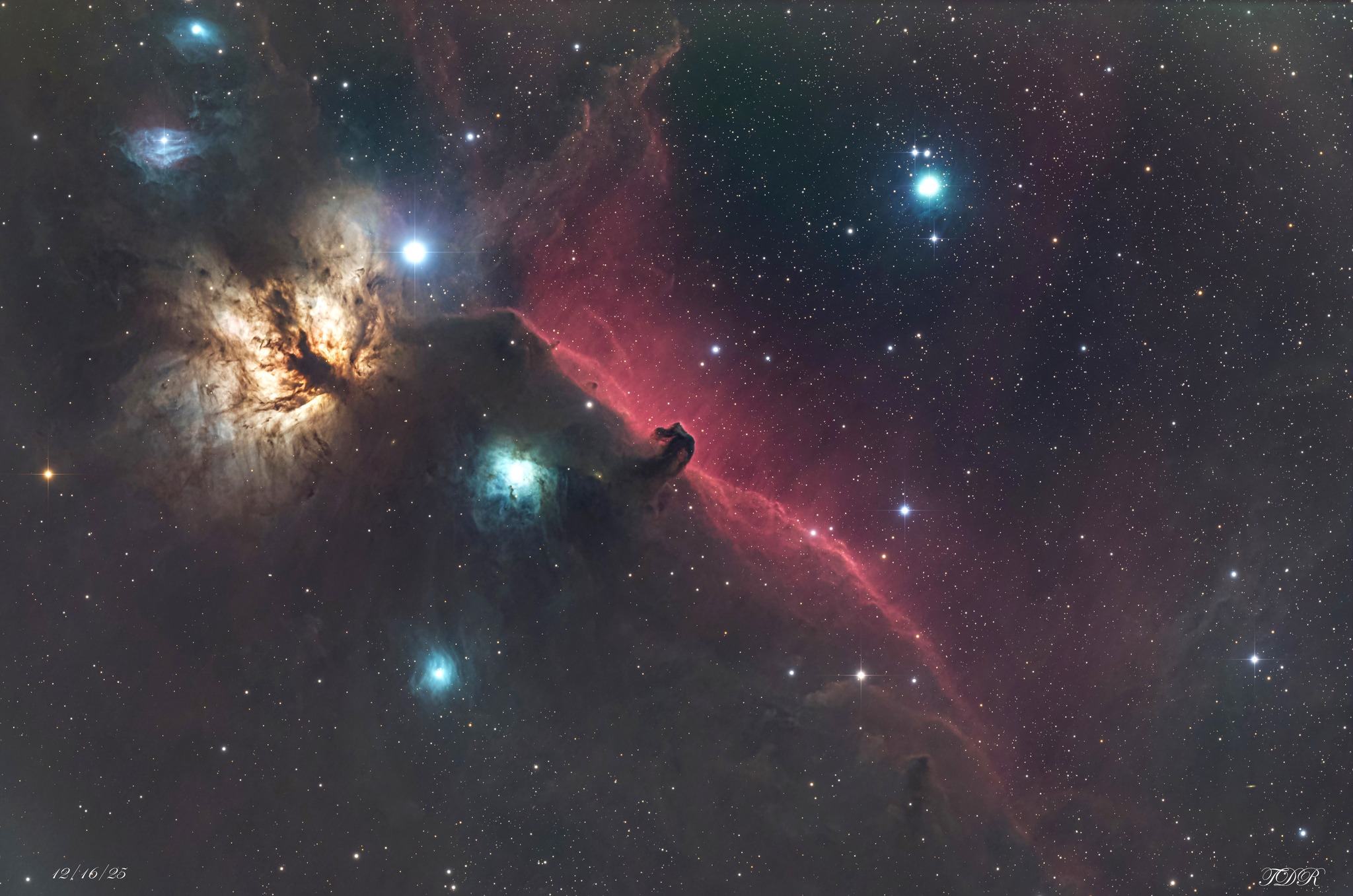
The Horsehead Nebula and Flame Nebula are two of the most iconic deep-sky objects in the night sky, located approximately 1,300 to 1,500 light-years away in the constellation Orion. They sit just south of the star, Alnitak, the easternmost star in Orion’s Belt.
Active star formation is taking place in the dark cloud of gas and dust of the Horsehead Nebula. The distinctive red color that you see in photographs of the Horsehead Nebula region is due to the ionized hydrogen gas sitting behind the dark nebula.
The nebulosity of the Horsehead is said to be energized by the bright star Sigma Orionis, the bright blueish star you see in the upper right of my image. Although it appears as one bright star, it is actually a multiple system of five stars. The streaky appearance of the hydrogen gas in the background glow is created by magnetic fields that infiltrate the area. The darkness of the Horsehead Nebula’s figure is created by thick interstellar dust blocking the light of the gas and stars behind it. It is interesting to note that the lower portion of the Horsehead’s neck is casting a shadow to the left.
The bright star Alnitak appears very close to the Flame Nebula in the sky. But the star and nebula are not physically associated with one another. The Flame Nebula contains a young cluster of stars. The dense gas and dust in the foreground of the nebula heavily obscures the star cluster inside the nebula, making studies at infrared wavelengths most useful ways of studying this interesting area. The energetic ultraviolet light emitted by the central O-type star IRS 2b into the Flame Nebula causes the gas to be excited and heated. The glow of the nebula results from the energy input from this central star. Within the nebula and surrounding the central hot star is a cluster of young, lower-mass stars, 86% of which have circumstellar disks. X-ray and infrared images indicate that the young stars are concentrated near the center of the cluster.
January 9, 2026 – Terri shared:
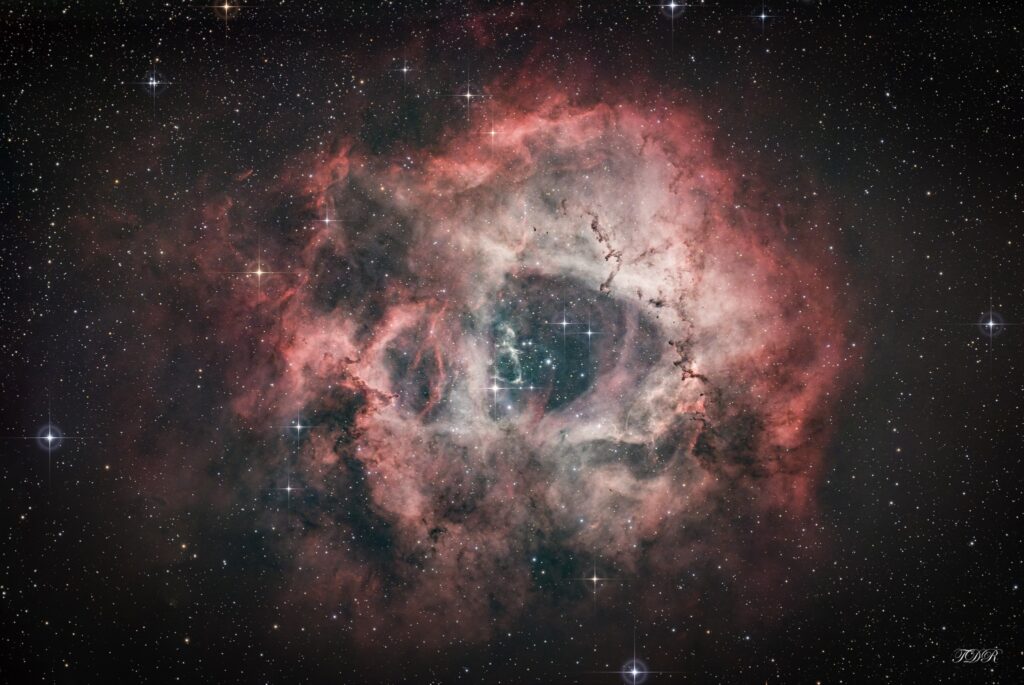
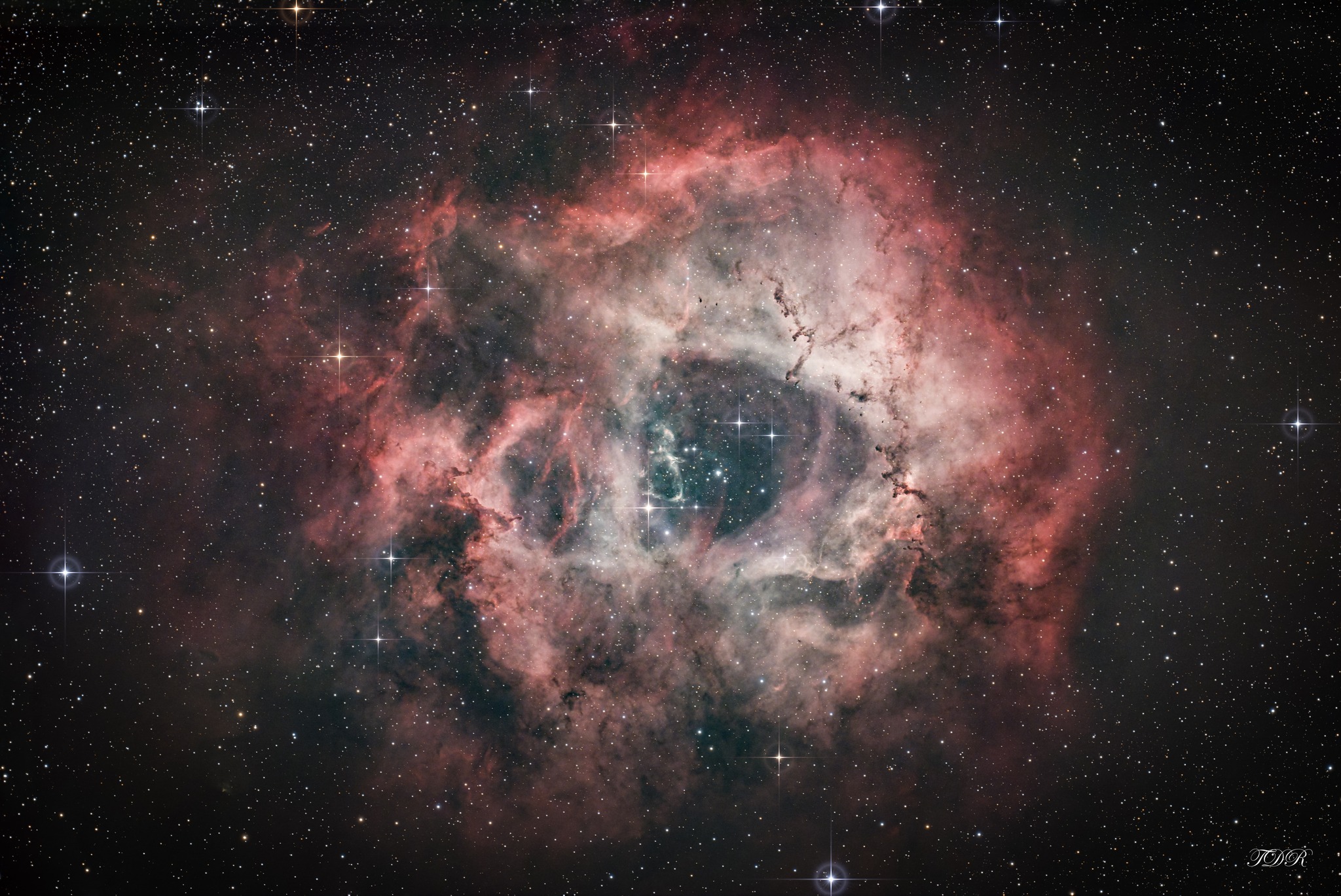
The Rosette Nebula lies at a distance of 5,000 light-years from Earth and measure roughly 130 light years in diameter. The radiation from the young stars excites the atoms in the nebula, causing them to emit radiation themselves producing the emission nebula we see. The mass of the nebula is estimated to be around 10,000 solar masses.
We have processed this nebula in the past, but our current equipment allows us to gather much more detail. In looking at it, I said to Dave, “It looks like there may be a bubble in the center!” Being a wise man, he agreed with me! We had not noticed this bubble in previous images! Bubbles in space occur when areas of intense star activity generate winds that blow the nebulous gasses in all directions. Further research shows that, indeed there is! (zoom into the center) A survey of the nebula with the Chandra X-ray Observatory has revealed the presence of numerous new-born stars inside the Rosette Nebula, studded within a dense molecular cloud.
Altogether, approximately 2500 young stars lie in this star-forming complex, including 2 massive O-type stars, which are primarily responsible for blowing the ionized bubble. Most of the ongoing star-formation activity is occurring in the dense molecular cloud to the south east of the bubble. Very cool!
A diffuse X-ray glow is also seen between the stars in the bubble, which has been attributed to a super-hot plasma with temperatures ranging from 1 to 10 million degrees Kelvin. This is significantly hotter than the 10,000 K plasmas seen in Hydrogen II regions, (typically red in appearance gasses) and is likely attributed to the shock-heated winds from the massive O-type stars.
*information courtesy of Cambridge Press and the Astrophysical Journal.
*Photo taken by Dave and I
January 12, 2026 – Terri reported:
Here’s how I spent my afternoon, following our shoot last night. We learned new techniques for acquisition and I learned new techniques for processing. The atmospheric conditions were not optimal, but I’m pretty happy with the result! I can’t wait for actually excellent conditions!
The planet was in Opposition. What is Opposition? Jupiter at opposition means Earth passes directly between the Sun and Jupiter, aligning them, which is the best time to see it because it’s closest, brightest, and visible all night, rising at sunset and setting at sunrise, offering clear views of its moons and cloud bands. It’s when the planet appears biggest and brightest as seen from Earth, appearing opposite the Sun in the sky!
January 15, 2026 – Terri wrote:
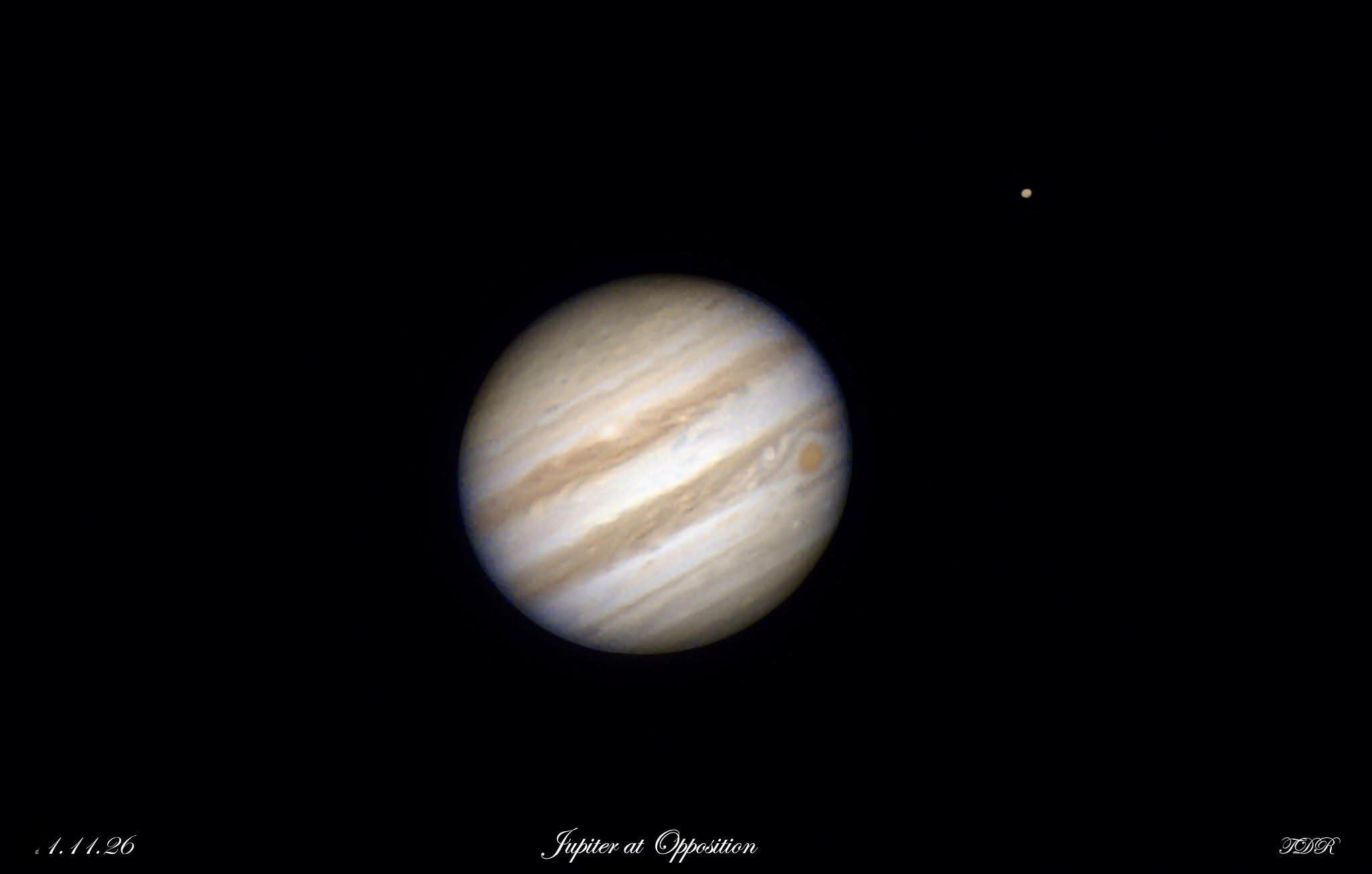
If you can stand it, another Jupiter. This time with the moons Io (upper) and Ganymede. It’s hard not go shoot it when conditions are good and it’s at opposition. One month from now, Jupiter will appear 20% smaller to us! Amazing to think about!
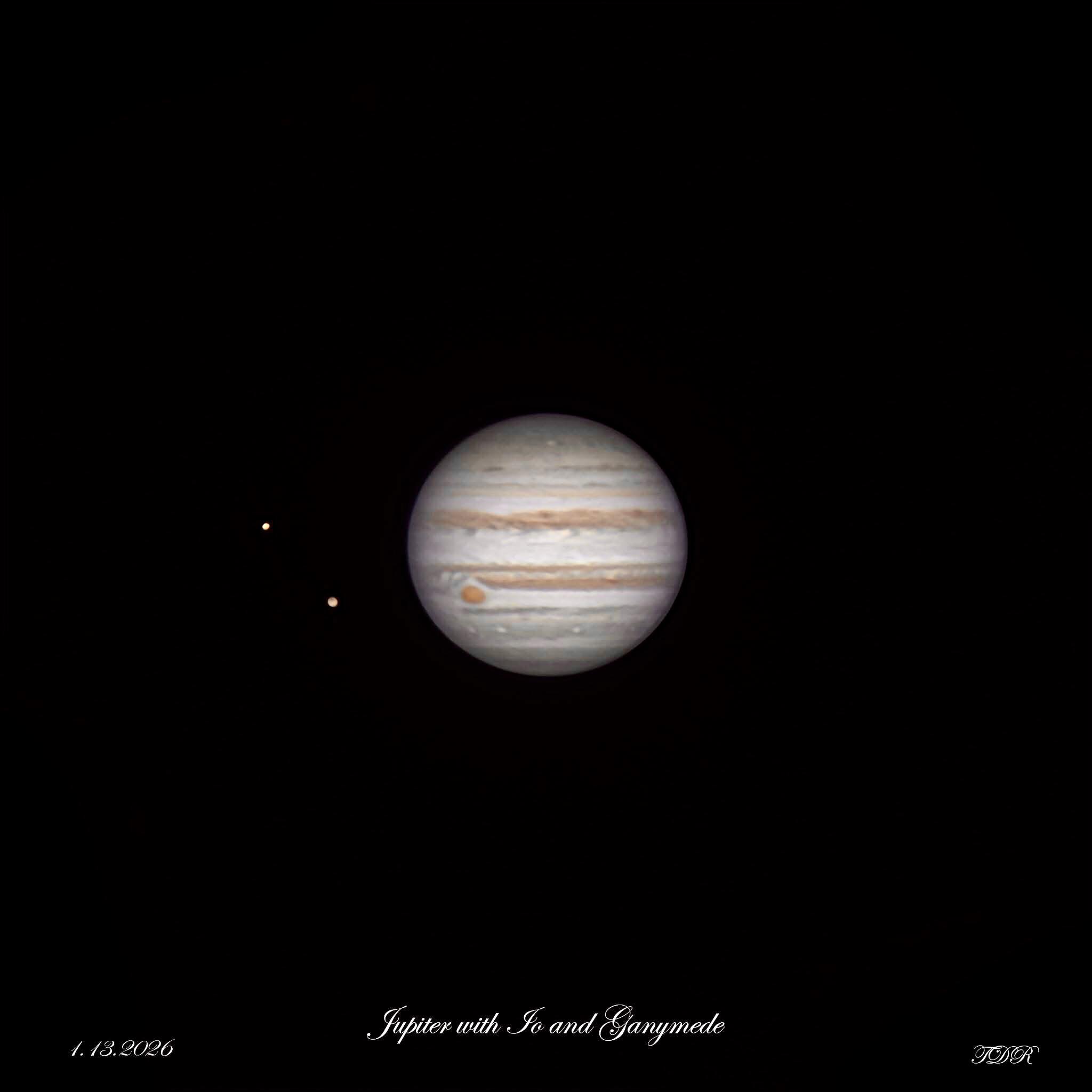
Thank you to Terri (& Dave) for sharing sharing your astrophotography with us (No AI artificial intelligence needed!), and giving mankind a perspective of our place in the universe! – Pizen Switch Times




More Stories
Obituary for Clarence Russell “Russ” Shafer: January 12, 1934 to February 19, 2026
Mari Basaca Fuentes WINS Nevada 2026 Poetry Out Loud Championship
Bound & Wrapped Co. Opens in Yerington: Offering Books, Flowers & Uniquely Crafted Gifts